Ask five portrait photographers which lens they would take to a shoot and you will probably get five different answers. One will swear by an 85mm f/1.8, another will not leave the house without a 70–200mm f/2.8, and someone else will insist that a humble 50mm is all anybody needs. They are all correct, which is the awkward part.
The prime-versus-zoom question is not about which lens is objectively better. It is about the rooms you shoot in, the people you photograph, how you like to work, and what your bank balance will tolerate. Here is how to think it through properly.
What Each Type Actually Does
A prime lens has one focal length. Nothing moves inside it when you focus, so the designers can optimise every element for that single field of view. The result is usually a smaller, lighter lens with a wider maximum aperture for the money.
A zoom covers a range, say 24–70mm or 70–200mm. You can reframe without moving your feet, which sounds like a small thing until you are photographing a restless three-year-old in a cramped living room.
Image Quality: Where the Real Difference Lies
Modern zooms are sharp. If you are comparing a good zoom against a good prime and expecting the prime to blow it out of the water, you will be disappointed. Sharpness is mostly settled.
The gap that still matters is aperture. A prime at f/1.4 or f/1.8 lets in far more light than a zoom at f/4, and that changes three things at once:
- You can shoot indoors in ordinary window light without pushing your ISO into mush.
- You can blur a distracting background into soft, creamy separation behind your subject.
- Your autofocus works faster and more reliably in dim conditions, because more light reaches the sensor.
A zoom with a constant f/2.8 aperture gets you close to prime territory, but it is heavy and expensive. The standard kit zoom that came with your camera, usually f/3.5–5.6, is the real weak point: perfectly usable outdoors on a bright day, awkward the moment you step inside.
Primes also tend to perform well wide open, whereas some zooms need stopping down a stop or so before the corners sharpen up. Both are usually corrected for distortion and colour fringing automatically by the camera or your editing software, so do not lose sleep over those.
Flexibility, or the Discipline of One Focal Length
A zoom lets you shoot a wide environmental portrait and then tighten to a head-and-shoulders frame a second later. At a wedding, an event, or any situation where people keep moving, that is worth a great deal. You miss fewer moments.
A prime removes that choice. You have to move, and moving changes the picture: your distance to the subject alters the perspective, and the background shifts with it. Some photographers find this makes them slow down and look more carefully. It also makes a gallery feel more consistent, because every frame was shot from a similar distance with a similar rendering. A zoom used carelessly produces a jumble of wildly different looks.
Neither approach is more artistic. But be honest about which one suits your temperament. If you fiddle, a zoom will encourage you. If you rush, a prime might calm you down.
Working Distance: The Bit Nobody Warns You About
On a full-frame camera, the classic portrait focal lengths sit between 50mm and 135mm, and each one demands a particular distance from your subject.
A 35mm puts you close enough to talk, which is lovely for environmental portraits but risks unflattering distortion if you crowd the face. A 50mm needs roughly a metre or so for a head-and-shoulders frame, which feels conversational. An 85mm gives you a comfortable gap and flattering compression, and most people relax when a camera is not pressed into their face. A 135mm or 200mm means standing across the room.
If you shoot on a crop-sensor body, multiply by around 1.5 (1.6 on Canon) to work out the equivalent. A 50mm behaves like a short portrait telephoto, and an 85mm becomes quite long.
This is where zooms quietly earn their keep. In a small studio or a tight kitchen, an 85mm prime may have you pinned against a wall. In a large hall, a 35mm will leave you cropping heavily later. A zoom adapts to the space you are standing in.
Practical tip: before a shoot, pace out the room and decide which focal length fits. If you cannot step back, a zoom saves the session.
Cost, Weight and Building a Kit
Here is the honest shape of the market, without pretending the numbers are fixed:
- A 50mm f/1.8 is one of the cheapest ways to get a wide aperture and shallow depth of field. It is the sensible first portrait lens for most people.
- An 85mm f/1.8 costs more but gives flattering compression and a relaxed working distance.
- A 24–70mm f/2.8 covers most of a portrait session in one lens, but it is heavy and pricey. The f/4 version is lighter and cheaper if you mostly shoot in good light.
- A 70–200mm f/2.8 is the workhorse for weddings and events. You will feel it by the end of a long day.
- Older manual-focus primes can be excellent value if you are happy to focus by hand and your subject can hold still.
Weight deserves more respect than it gets. A lens you leave at home because your shoulder aches is worth nothing. Autofocus speed and quietness matter too, particularly with children, shy subjects and quiet ceremonies.
How to Decide, Practically
Start with your next three shoots rather than an imaginary future one. If they are indoors, in rooms you know, with people who will sit still, buy a fast prime and learn it properly. If they involve events, moving crowds or shared spaces you cannot rearrange, a zoom will pay for itself in usable frames.
A few ways to test the water:
- Rent or borrow a lens for a weekend before committing.
- Shoot an entire session at one focal length, even if you have to tape the zoom ring in place, and see whether you miss the range.
- Buy used from a reputable dealer if budget is tight, and keep the lens long enough to know it.
- Add a fast prime to a zoom kit later, for the handful of frames that really need shallow depth of field.
The lens you know well will beat the lens with the better specification sheet every time. A modest 50mm used for a year will teach you more about light, distance and expression than a bag of glass you swap every five minutes. Pick one, shoot a few thousand frames, and let the results tell you what to buy next.
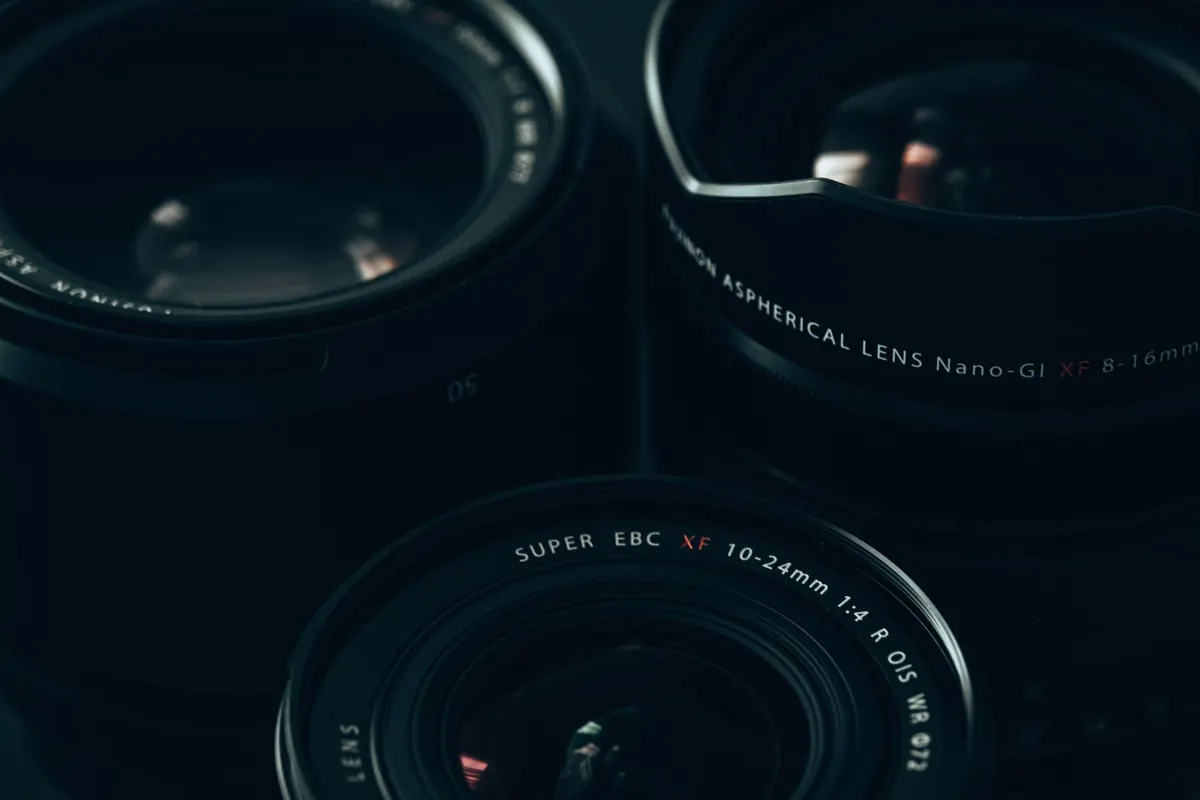
Photo: Egor Komarov / Pexels